Japanese Knotweed is one of the most invasive non-native plant species found throughout the UK. Introduced to the UK in the late nineteenth century from Japan (and other parts of Eastern Asia) for use as an ornamental plant in garden centre sales, it has now spread rapidly into gardens, development sites and along transport routes.
Many property owners want clear guidance on how to kill Japanese Knotweed permanently. While the plant can be managed successfully, long-term eradication requires patience, correct treatment methods and compliance with environmental law.
Quick Answer: How to Kill Japanese Knotweed
Japanese Knotweed can be best controlled using a systematic plan that will provide the site with a professional treatment program; the treatment programs could be: Professional Herbicide Treatment, Controlled excavation or a combination of both. Japanese Knotweed should be treated using an integrated weed control program that targets the rhizome (roots) of the plant in the ground.
- The most effective time to apply systemic herbicides (usually glyphosate based) is in late summer.
- Excavating Japanese Knotweed typically provides faster removal but generates regulated waste.
- Using cutting, mowing, or allowing Japanese Knotweed to grow naturally does not usually destroy the roots of the plant.
To get rid of Japanese Knotweed for good, the entire underground root system has to be destroyed so it cannot regrow in future seasons.
Table of Contents
What Is Japanese Knotweed?
Japanese Knotweed (Fallopia Japonica) is the most common of four invasive knotweed species in the United Kingdom. It is closely related to giant Knotweed; however, it has become the dominant invasive species in the UK.
It is a perennial plant that will grow every year from its extensive underground root system composed of Rhizomes. It can grow up to 10 feet tall at mid-summer when growing in full sun.
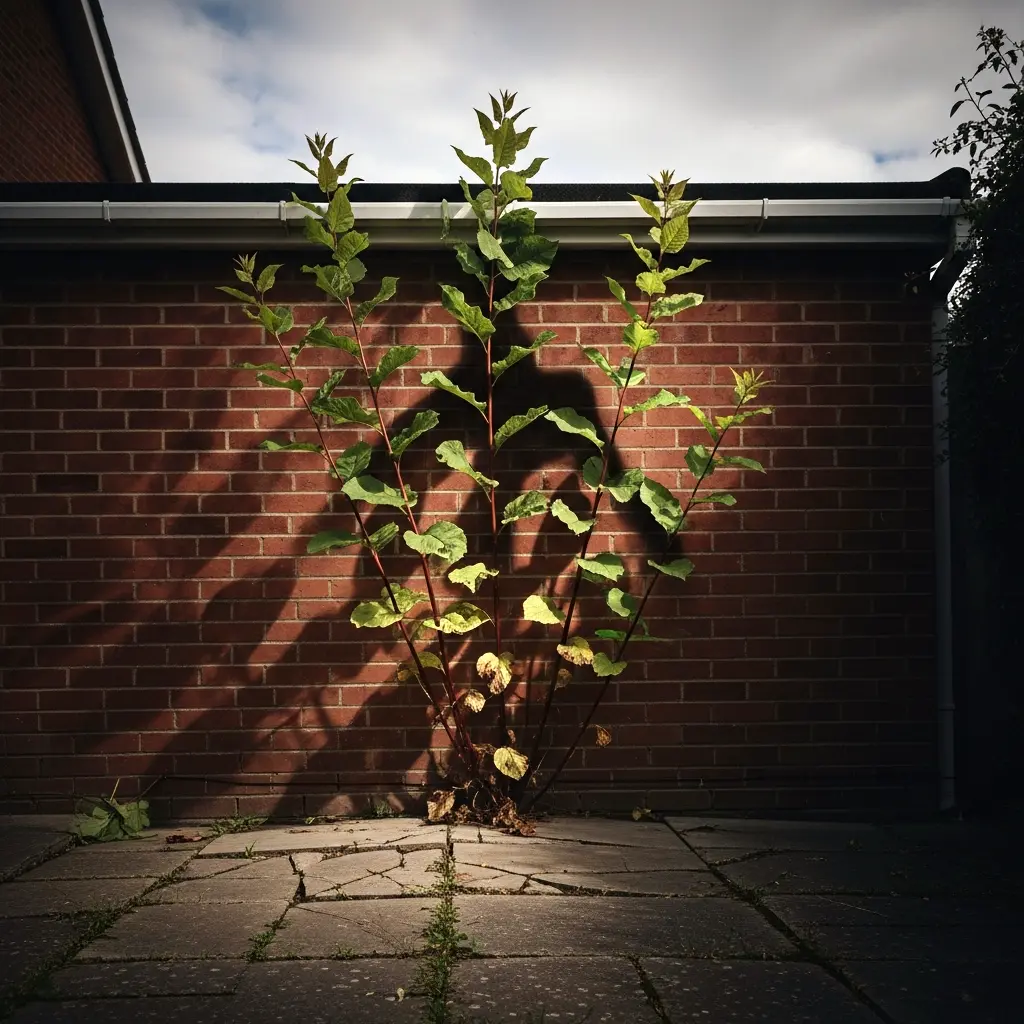
Japanese Knotweed has hollow stems that have been known to grow at a rate of approximately 3 inches (7-10 cm) in a single day under ideal conditions. The leaves of the plant are long and narrow with a pointed tip and a zigzag arrangement on either side of the stem. Smaller creamy white flowers bloom during late Summer/Early Autumn.
The plant thrives in most soil conditions found across the UK, including poor soil and disturbed ground. It is tolerant of poor soil conditions, including land contaminated with heavy metals.
Due to the fact that Japanese Knotweed grows so densely, it prevents a wide variety of native plants and other plants from growing near it. It also creates pressure on structures (as well as the foundations underneath) by pushing up against them. However, it does not actively seek out tree roots.
Because of its rapid spread and ability to grow in a wide variety of environments, Japanese Knotweed is considered by many to be one of the most invasive plant species on earth.
Why Japanese Knotweed Spreads So Easily
Japanese Knotweed’s primary method of spreading is through its large network of rhizomes (its underground root system). It can grow back from root or stem pieces as small as 1cm in length, and can regrow from a fragment as tiny as 0.5 grams. As a result, standard gardening waste management practices do not work effectively for disposal.
Japanese Knotweed reproduces in two ways: naturally and by way of people (through digging, moving dirt, or carrying around contaminated waste).
Root systems are capable of staying dormant for many years at the bottom of the soil until the right growing conditions occur, then sprout new plants.
Due to the regenerative nature of Knotweed, cutting or mowing will typically cause the plant to grow again, rather than kill it. Digging is only effective in removing all of the roots, which is extremely rare without professional excavation – attempting to do so yourself will almost certainly make things worse.
What Kills Japanese Knotweed Permanently?
To eradicate Japanese Knotweed, the rhizomes must be destroyed.
Japanese Knotweed is best controlled by applying a suitable herbicide. Glyphosate-based herbicides are commonly used across the UK to treat Japanese Knotweed effectively.
To achieve effective treatment, glyphosate must be applied in late summer or early autumn after the plant has flowered, when nutrients are moving into the rhizomes.
It usually takes at least three growing seasons to eradicate Japanese Knotweed using weedkiller alone. A consistent combination of control measures will gradually deplete the rhizomes over time, leaving them with less energy to sprout new shoots.
Spraying or injecting the stems with chemicals can be effective when done correctly. Professional glyphosate products are typically required to treat established infestations effectively.
Professional excavation of contaminated soil is one of the fastest methods of removal. However, it is often more expensive than long-term herbicide programmes.
Can I Remove Japanese Knotweed Myself?
You do not automatically have to remove Japanese Knotweed from your land unless it is causing a nuisance. However, you must prevent it from spreading off your property.
Japanese Knotweed is listed on Schedule 9 of the Wildlife and Countryside Act 1981. It is an offence to plant it or cause it to grow in the wild.
If you allow Japanese Knotweed to spread from your property into neighbouring land, it may constitute an offence.
If you allow Japanese Knotweed to spread and it causes a detrimental effect to neighbouring land, disputes may arise. In some cases, anti social behaviour legislation under the Crime and Policing Act 2014 has been used where knotweed spread has caused significant issues.
Waste from Japanese Knotweed is classed as controlled waste under the Environmental Protection Act 1990.
You must:
- Use a registered waste carrier
- Take waste to an authorised disposal site
- Avoid composting it
- Avoid placing it in household waste bins
You should not add Japanese Knotweed to your home, council or household waste bin, as it can survive composting and regrow from small fragments.
The Environment Agency regulates how controlled waste must be handled. Local councils may also become involved where improper disposal or environmental harm is identified.
If you are employed to transport material by road and it may contain Japanese Knotweed, you must comply with controlled waste law.
What the Law Actually Requires
You are prohibited from allowing Japanese Knotweed to spread from your property to nature (the wild) or adjacent lands (neighbouring properties).
Contaminated soils and plant materials must be disposed of in compliance with Controlled Waste Regulations.
You will not automatically be required to remove Japanese Knotweed from your land; however, you may be responsible for removal if it is creating a nuisance or a detrimental impact upon an adjoining landowner’s land.
The local council and/or applicable regulatory authority can act when they identify any anti-social behaviour or environmental damage caused by the presence of Japanese Knotweed.
Click here to find out more about Japanese Knotweed and the Law.
The Risks of DIY Digging
Digging might seem like the most efficient method to remove Japanese Knotweed from your garden or lawn.
However:
- The rhizomes can extend several metres horizontally.
- Any root material that is left behind can also lead to an additional spread of the infestation.
- Excavation produces large volumes of controlled waste.
All contaminated soil must be sent to a licensed waste disposal facility as described in Environment Agency guidelines.
Covering the area with a heavy-duty barrier for at least one full growing season can help smother Japanese Knotweed. Still, the barrier must extend at least 10 feet beyond the last visible shoot. Even then, regrowth can occur.
Cutting and digging are not effective long-term methods for controlling Japanese Knotweed.
Impact on Wildlife and Property
Japanese Knotweed grows into dense stands, which will displace or out-compete native plant species and consequently reduce biodiversity. In addition, it can negatively impact populations of many native insects, birds, and other wildlife.
Although Japanese Knotweed does not usually cause direct damage to good quality concrete, it will grow into and exploit any weakness or crack found in a structure.
The presence of Japanese Knotweed on land can potentially hinder the sale of a property, and/or obtaining a mortgage. Most lenders request proof of the proper management of the Japanese Knotweed infestation before they will provide financing.
Professional Treatment Options
Professional contractors are experts in both treating Japanese Knotweed and disposing of it safely. Several steps may be involved in a structured approach:
- Site inspection and mapping to identify the extent of infestation
- Herbicide treatment over several growing seasons
- Monitoring the site for signs of regrowth
- Controlled removal of contaminated soil where necessary
- Safe and compliant disposal of all waste from the site.
Professionals can provide a quick and effective removal of invasive species when compared to a homeowner using their own time and money for an invasive plant removal project; this is due to the professional contractor’s knowledge of best practices for using herbicides, proper application technique, and disposal (or other) of waste material.
It is equally important to continue monitoring a site even after all visible growth of the invasive species has died, as small, stunted leaves or new sprouts may still require treatment.
Professional management of invasive species is often the safest method for property owners who want assurance that there will be compliance with all applicable laws and regulations.
Step-by-Step: How to Deal With Japanese Knotweed Safely
A quick, structured guide to help you reduce risk and avoid mistakes. This supports understanding only and does not replace a survey or specialist report.
Important
Japanese knotweed can spread through disturbance and incorrect disposal. If this relates to a sale, purchase, or mortgage, the safest route is a site visit and a written plan.
Ensure the plant is Japanese knotweed and not bamboo or another invasive plant species such as giant knotweed.
Next: Use the options at the bottom to get a free photo review, or book a survey if you need certainty for legal or mortgage purposes.
Examine surrounding soil, nearby land, garden areas and property boundaries. Rhizomes often extend beyond visible stems.
Digging without a structured plan can spread root fragments and increase the infestation.
Warning: Disturbance is one of the most common reasons infestations expand.
This may involve a multi-season herbicide programme, controlled excavation, or a combination of approaches depending on the site.
Good practice: Choose methods that reduce spread risk and keep disposal compliant.
Even when visible stems die back, dormant rhizomes may produce new shoots. Continued monitoring is essential.
Any waste material containing Japanese knotweed must be treated as controlled waste and disposed of through authorised channels.
Warning: Incorrect disposal can create legal liability and further spread.
Next step
Choose the option that matches how certain you need to be.
A consistent combination of measures over time is the most reliable way to achieve long-term eradication.
For Gardeners and Property Owners
Gardeners must be cautious when removing Japanese Knotweed; removal of the plant will spread the weed through the movement of soil and by cutting the stem without proper containment.
If you believe you have Japanese Knotweed growing on your property, please do not remove it until you have received additional information about its control. The sooner the plant is identified, the better the opportunity to manage it.
Although you may be able to limit the growth of Japanese Knotweed, complete removal without a structured program for management will be almost impossible.
Find out what weedkiller is the best for dealing with Japanese Knotweed.
Management Category C and Its Implications
Management category C applies where Japanese Knotweed is causing visible material damage, materially restricting amenity space, or presenting a clear risk to structures.
Under management category C:
- Specialist remediation advice is required
- A detailed specialist report must support advising lenders
- Mortgage retention may apply until appropriate management is implemented
Importantly, this does not automatically prevent lending. It requires clear evidence of specialist remediation and ongoing management.
Key Facts About Japanese Knotweed
- Japanese Knotweed is listed on Schedule 9 of the Wildlife and Countryside Act 1981. It is an offence to plant it or cause it to grow in the wild.
- Waste containing Japanese Knotweed is classified as controlled waste under the Environmental Protection Act 1990.
- The Environment Agency requires that a registered waste carrier transport controlled waste to an authorised disposal site.
- Japanese Knotweed spreads primarily through rhizomes rather than seed.
- Fragments of rhizome as small as 1 cm can generate new plants.
- The plant can remain dormant below ground for years before reappearing.
- It usually takes at least three growing seasons to eradicate an established infestation using herbicide alone.
- Cutting or mowing without containment can increase the spread.
- Covering affected soil may suppress growth but rarely eliminates the underground root system.
- Professional excavation is one of the fastest methods of removal, but it generates significant volumes of controlled waste.
To get rid of Japanese Knotweed for good, the entire underground root system has to be destroyed so it cannot regrow in future seasons.
Final Thoughts
Japanese Knotweed is considered to be one of the most aggressive non-native plant species found in the United Kingdom. Japanese Knotweed grows quickly and aggressively by means of its rhizome system, can regenerate from small fragments and will grow in virtually all types of soil.
Permanent removal of Japanese Knotweed relies on removing and/or killing the entire underground root system (rhizome) and proper disposal of the waste according to guidelines set forth by the Environment Agency and Environmental Protection Act.
Although DIY treatment is possible, professional involvement is strongly recommended, especially if it’s development land, public land, or if you intend to sell your property. If you sell a house with Knotweed present, you can potentially lose value or face a legal issue down the line when the new buyers are affected by its growth. A professional contractor like Knotweed Services removes all of this headache.
With the correct approach, Japanese Knotweed can be managed effectively – but it requires consistency, compliance and patience.
FAQ
RICS surveyors may report signs of Japanese knotweed when it is visible during an inspection, but they are not usually providing a specialist knotweed survey. If knotweed is suspected, a dedicated Japanese knotweed survey and management plan is often recommended for clarity and lender or solicitor requirements.
Surveyors typically look for visible characteristics such as tall hollow stems, a zig-zag leaf pattern, dense stands, and late-summer flowers. Identification can be difficult outside the growing season or where growth has been cut back, which is why photo identification or a specialist survey is often the safer option.
You do not automatically have to remove Japanese knotweed from your land, but you must not allow it to spread into the wild or onto neighbouring property. You also need to handle and dispose of knotweed waste correctly, as it is treated as controlled waste.
DIY treatment is possible, but mistakes are common and can make the infestation worse. Digging and cutting can spread viable fragments, and disposal must be legally compliant. If you need certainty for a sale, mortgage, or boundary risk, professional assessment and treatment is usually the safer route.
Herbicide programmes commonly take multiple growing seasons, often three years or more for established infestations. Timescales vary depending on site conditions, access, spread, and whether excavation is required. Monitoring for regrowth is essential even when visible stems appear dead.
Japanese knotweed does not usually break through intact concrete, but it can exploit existing cracks and weaknesses in structures and hard surfaces. The bigger issue for many property owners is how knotweed affects lending, conveyancing, and future liability if it spreads to neighbouring land.