Japanese Knotweed Removal Sunderland
3
LIVE JAPANESE KNOTWEED JOBS IN Sunderland
57
SUCCESSFUL JAPANESE KNOTWEED REMOVAL PROJECTS IN Sunderland
100%
SUCCESSFUL PROPERTY SALES AFTER TREATMENT
2
Sunderland BASED JAPANESE KNOTWEED SPECIALISTS
Knotweed Services is one of Sunderland’s leading Japanese knotweed removal companies. Our Sunderland-based surveyors are always ready to help.
As Japanese Knotweed Specialists, we are members of the PCA, a trade association dedicated to the treatment and control of invasive plants. We use modern Japanese knotweed eradication methods.
We’ve eliminated Japanese knotweed from large-scale projects in Sunderland and England. Identifying, surveying, treating, and monitoring an invasive weed like Japanese knotweed requires expertise. Our Japanese Knotweed experts are available.
Japanese Knotweed Specialists in Sunderland
Japanese knotweed is one of the most aggressive plants in Sunderland and the UK. Spreading quickly with the ability to damage buildings, homes, and other property.
We conduct detailed Japanese Knotweed surveys, detecting how invasive the Japanese knotweed is. We provide detailed quotes and plans, delivering an accurate assessment of this invasive weed and recommendations for any Japanese Knotweed Treatments.
With our insurance backed guarantees – you have complete peace of mind.
How Does Japanese Knotweed Spread?
- Japanese Knotweed poses a serious threat to the structure of your building or property because it can grow through concrete and tarmac.
- Mortgage lenders can have concerns about the presence of Japanese Knotweed – this can effect property owners for both buying and selling.
- Japanese Knotweed is an invasive weed – obstructs visibility and access to paths, highways, and other infrastructure. Producing annoyance for commercial properties in particular.
We remove, treat, and dispose of Japanese knotweed in Sunderland. All Japanese knotweed removal in Sunderland has an insurance-backed guarantee against re-emergence.


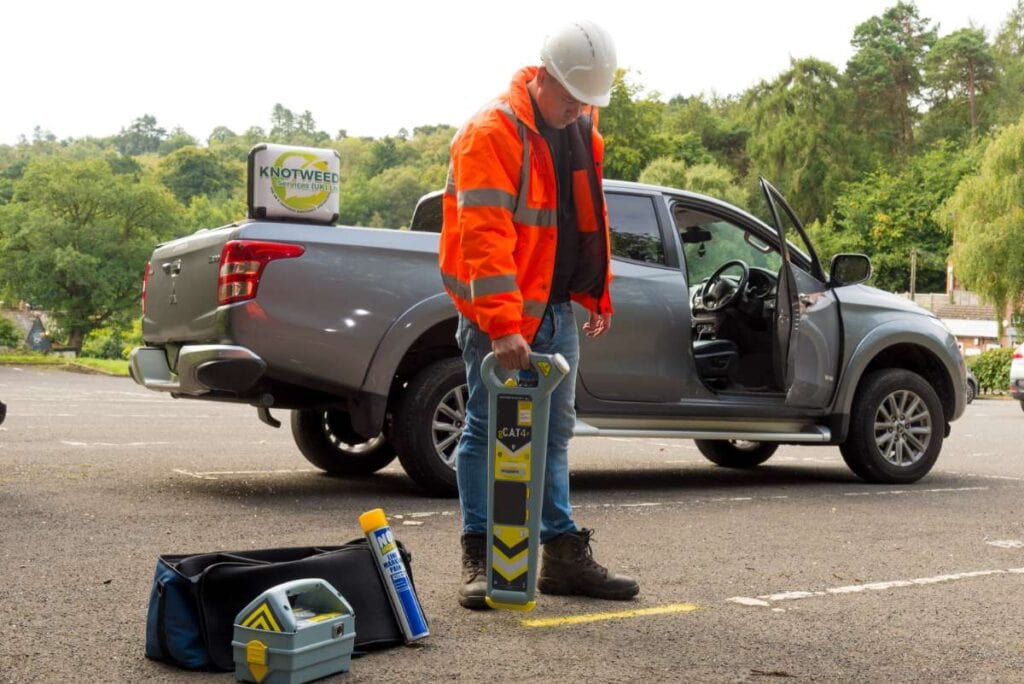
FREE IDENTIFICATION
Fill in the form below, attach your pictures and we’ll let you know if the plant in your picture is Japanese Knotweed.
Call our knotweed specialists to take control of your Japanese knotweed problem in Sunderland
Call us on: 0800 689 4146 for more information on Japanese Knotweed solutions in Sunderland
We're here every step of the way
RESIDENTIAL JAPANESE KNOTWEED specialists in Sunderland.
WHAT YOU NEED TO KNOW ABOUT JAPANESE KNOTWEED eradication in Sunderland
Japanese knotweed treatments vary with infestations. Japanese knotweed removal may require multiple methods.
We control Japanese Knotweed scientifically. Additionally, we have worked in Sunderland for more than ten years and are still doing so.
Our Japanese Knotweed experts evaluate a site’s individual features to find the best treatment. We provide a project management strategy and guarantee our work.
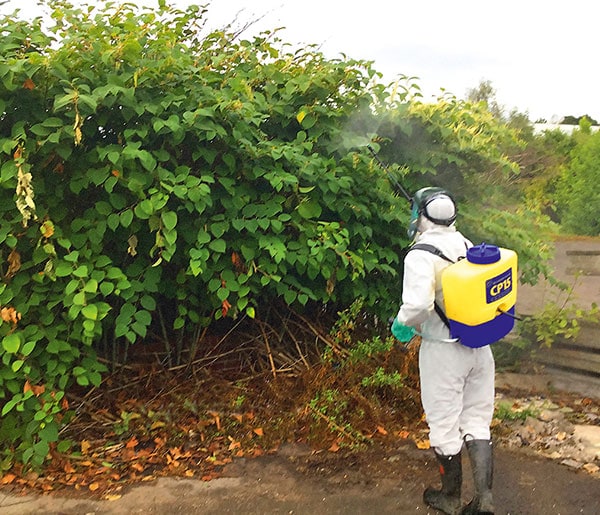
FOLIAR SPRAYING
The most common treatment. Using a backpack to spray strong poisons. We do our best not to hurt other plants. The spring season is the ideal time to spray for Japanese knotweed.

FOLIAR LEAF WIPING
We use a tool to “physically wipe” our chemicals onto the Japanese knotweed leaves in this Japanese knotweed treatment. Because this application is so exact, we usually employ a higher chemical concentration.

STEM INJECTION
A precise amount of pesticide is injected just into the invading weed. Due to the fact that it is directly injected into the Japanese Knotweed, this is the most ingenious method of removal. The weather has no impact on it.
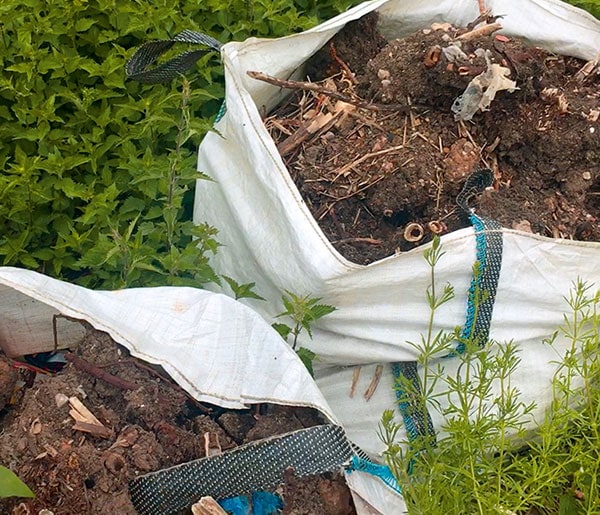
BIOMASS REDUCTION
Biomass is a form of Japanese Knotweed excavation and removal, but rather than extracting all of the Japanese Knotweed-affected soil, we merely remove the infected soil. It is an excellent Japanese Knotweed treatment method that permits soil reuse. Reducing the use of landfills.
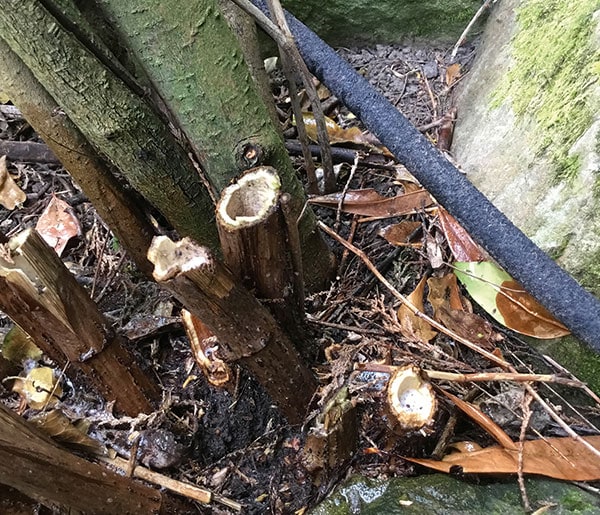
CROWN REMOVAL
Crown and stems can grow back, and even small pieces of cut crown or stem can grow into a new invasive weed. Getting rid of these parts is a great way to get rid of the problem. Removes the Fallopia Japonica’s roots completely.
COMMERCIAL JAPANESE KNOTWEED SOLUTIONS.
WHAT YOU NEED TO KNOW ABOUT IDENTIFICATION AND REMOVAL
If you intend to develop or build on Japanese Knotweed infested land, a 5-year (herbicide) management plan isn’t an option. Because of the time limits imposed by planners and construction workers, as well as resource availability and cost.
In cases of development, the Environment Agency recommends removing all Japanese Knotweed rhizome from the soil to Guarantee total elimination.
Our Japanese Knotweed Specialists walk you through the process from the start, identifying the land’s current use, future development plans,
time-scales, schedules, and planning applications (if approved, we’ll ask for copies to help with the treatment plan) and giving advice on the most cost-effective ways to solve the problem based on your project needs.
Pictures, measurements, and project details will be taken. Plant equipment access points, disposal vehicle routes, potential bund areas, and a Risk Assessment of the site and potential hazards will be noted.
The surveyor examines nearby waterways, neighbouring properties, and site plans when deciding the most suitable weed management plan for identification and removal.
For all of our projects, we provide both machinery and professional personnel. Our organisation’s technicians and operatives are trained and directly employed. We will directly regulate and supervise every work, ensuring that all regulations are carefully adhered to, and no cross-contamination happens. Alternatively, we can supervise the project if you provide the equipment.
NO TWO JAPANESE KNOTWEED PROJECTS ARE THE SAME.
In reality most eradication programs are a combination of treatments.
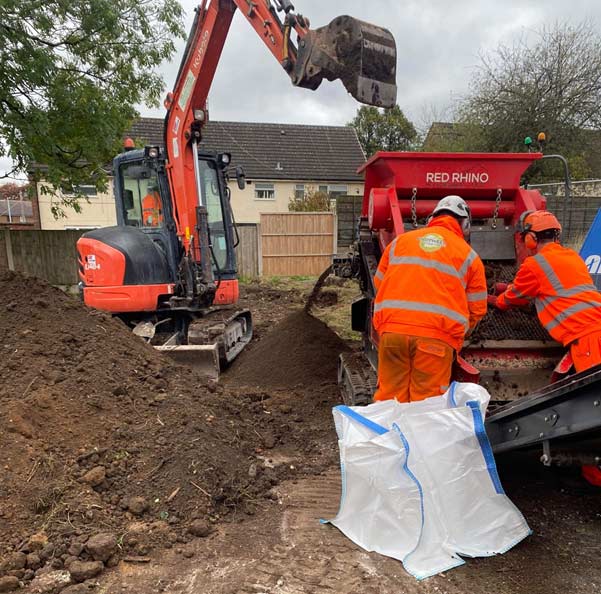
SOIL SCREENING
Thousands of UK sites use this methodology and is one of the more popular eco control solutions.
Screening separates Japanese knotweed rhizomes from the soil. An Environment Agency or Natural Resources Wales D6 exemption allows Japanese knotweed to be burned on-site or transferred to an authorized landfill at a reduced cost.
Sanitized soils (removal of the invasive plant) are good for soft landscaping. Fewer landfill visits reduce landfill and backfill expenses and a site’s carbon footprint.

BIOSECURITY SUPERVISION
Our biosecurity experts can monitor your Japanese knotweed excavation.
We can establish a biosecurity boot- and machine-washing station at the site entrance.
All contractors will sign the site’s lead contractor’s toolbox talk.
Biosecurity-risk areas can have temporary geotextile barriers.
Our Japanese knotweed specialists will submit a biosecurity report after finishing.

EXCAVATION AND DISPOSAL
Fantastic when identification and removal is needed quickly. Japanese Knotweed and contaminated soil must be moved to an authorised landfill.
Land development can begin shortly after removing the infestation. There is no faster or more effective way of Japanese Knotweed eradication or treatment for removing its rhizome system.
A licenced waste haulier takes all off-site refuse to a landfill, even invasive plant roots!

CELL BURIAL
Cell burial involves moving Knotweed-contaminated soil from one site location to another and burying it in a trench enclosed with a root barrier membrane.
Japanese Knotweed burial requirements:
- The Environment Agency proposes a 2-meter-deep burial chamber.
- The grave should be 5 metres deep.
- All root barrier seams are welded together to construct a cell Japanese Knotweed can’t escape. Backfill with clean soil.
- All site designs should include their position to minimise inadvertent disturbance of the burial site.

STOCKPILE & TREAT
Bundling relocates Japanese Knotweed contaminated soil. A bund is a 0.5-metre-deep zone of polluted soil.
The bund can be elevated or lowered to blend in with its surroundings.
Bunds are used to carry Japanese Knotweed to empty land, and treatment can begin.

HERBICIDE APPLICATION
Japanese knotweed treatment plans will be tailored to ach site.
This particular Japanese Knotweed treatment includes 3x herbicide applications per year via foliar spray or stem injection for three years, followed by two years of monitoring.
A detailed treatment record with photos and an annual report is given after each appointment.
OUR JAPANESE KNOTWEED SOLUTIONS ARE AVAILABLE THROUGHOUT Sunderland
- Ashbrooke
- Ayres Quay
- Barnes
- Carley Hill
- Castletown
- Christchurch
- Deptford
- Downhill
- Farringdon
- Fatfield
- Fulwell
- Gilley Law
- Grangetown
- Grindon
- Grove
- Hastings Hill
- Hendon
- Hill View
- Hollycarrside
- Leechmere
- Marley Pots
- Mill Hill
- Millfield
- Monkwearmouth
- Moorside
- Nookside
- North Hylton
- Pallion
- Pennywell
- Penshaw
- Roker
- Ryhope
- Seaburn
- Sheepfolds
- Shiney Row
- Silksworth
- South Hylton
- Southwick
- Springwell
- Sunniside
- Thornhill
- Tunstall
- Vaux
- Warden Law
- Witherwack